
A drug has to be efficacious, safe, and potent – but first of all, it has to get to the right place.
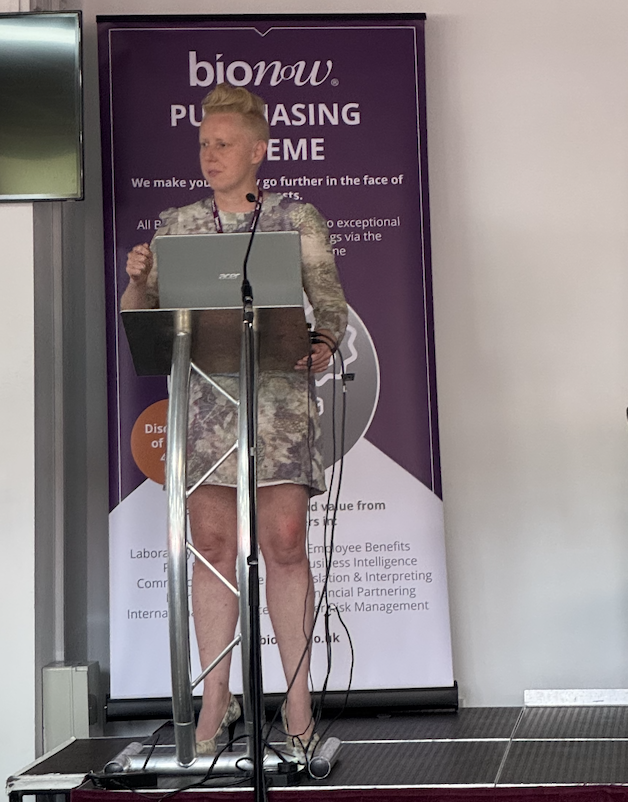
On Thursday 10th of July, the Formulation Adviser to Cellestial Health, Prof Claire Thompson of Agility Life Sciences, presented on the topic of formulation choice for proof-of-concept studies in Parkinson’s models at the Bionow Neuroscience conference in Sheffield.

Medicinal chemistry strategies remain the golden standard for enhanced brain delivery of small molecules, with Kp,uu of at least 0.03. However, drug discovery and lead optimisation is an expensive and lengthy undertaking, so first we want to test if the target can be safely and effectively modulated. How can we go about that? Tool drugs offer an attractive prospect – they may not be the final product that is suitable for patient dosing, but they engage the correct biology so that the hypothesis can be tested.
The problem is, they are often badly-behaved molecules. To overcome their limitations, formulation and delivery method strategies can be employed. Solubility, pH, and viscosity have to be carefully optimised to preserve experimental integrity and ethics. This is where Agility Life Sciences excels.
Prof Claire Thompson comments:
“The tool drug showed significant challenges, but we were able to overcome these using a number of formulation strategies for intranasal delivery. It was a pleasure to work with Dr Hastings and the Cellestial Health team on their quest to develop novel therapeutics for Parkinson’s disease.”
Our collaboration with Agility allowed Cellestial to conduct a number of proof-of-concept trials in models of Parkinson’s, where dosing had to last up to 42 days.
And just like that, another badly-behaved molecule was put to good use.