
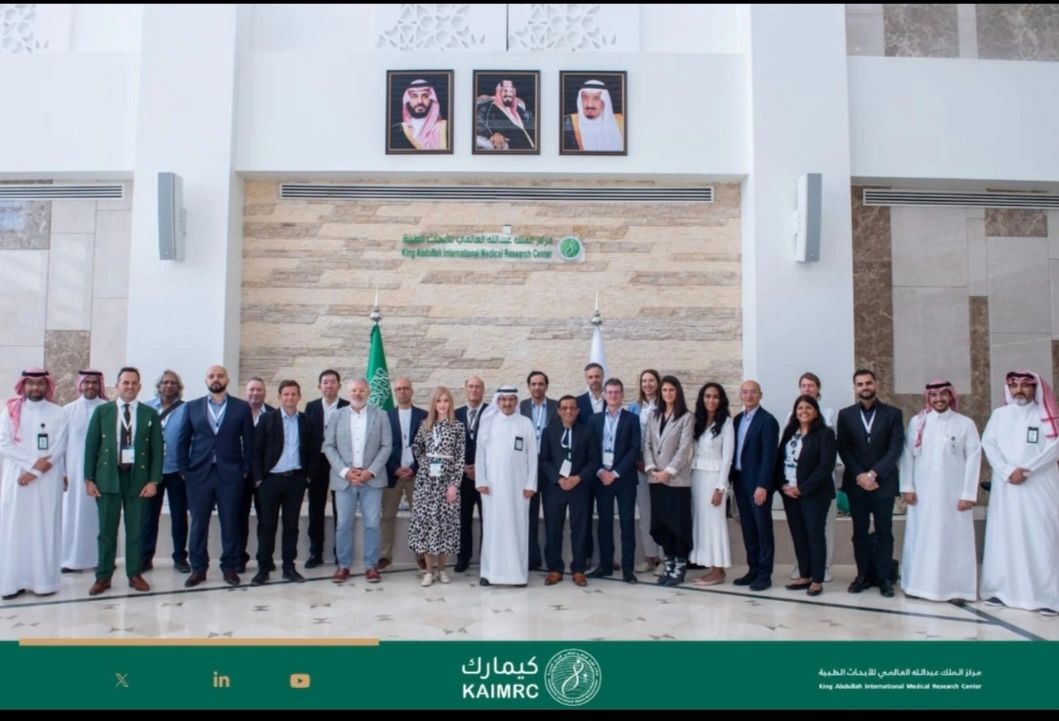
On October 1-2, King Abdullah International Medical Research Center (KAIMRC) in partnership with J.P. Morgan Asset Management and the Ministry of Investment (MISA) welcomed 10 global finalists startup companies as well as experts from the biotech and pharmaceutical industry in Riyadh at the #LSIF2025, hosted at #KSAUHS Convention Centre.
This event supports the goal of SaudiArabia to advance its biotechnology capabilities and become a prominent global innovation hub, in alignment with the #Vision2030 to transform the health sector, diversify the economy, and improve equality and inclusion in the workforce.

What have we learnt?
✦ As emphasised by Srini Akkaraju during the panel sessions, it makes most sense to build a localised hub of innovation rather than spread efforts thin across multiple centres
✦ No innovation centre can do it alone, and we all benefit from sharing world-leading practices
✦ Academic institutions, commercial sector, entrepreneurs, and funders have to work together

Dr Nat Hastings comments:
“The key theme of how to advance local innovation echoed our previous discussions in Cambridge at the One Nucleus BioWednesday event, that no single aspect like access to funding or facilities or great ideas can thrive alone. It is only when all components come together that an ecosystem is born.”

Many congratulations to Rinri Therapeutics and Simon Chandler who received the first prize to expand their operations, as expected the UK life science representation was very strong!
Congratulations also to EpiBone, Inc., FimmCyte, Genethon, Ten30 Biosciences Inc, NanoPalm | نانو بالم, Script Biosciences, Neurenati Therapeutics, and Synthis Therapeutics, Inc. who alongside Cellestial received prizes to support their collaborations with commercial and academic partners in Saudi.

What are the next steps for Cellestial?
We will continue working with new partners including NEOM to facilitate knowledge transfer and explore opportunities in the Parkinson’s space. As the Saudi population over 65y.o. is predicted to double from 2020 to 2030, conditions affecting older age are of strategic priority.
