
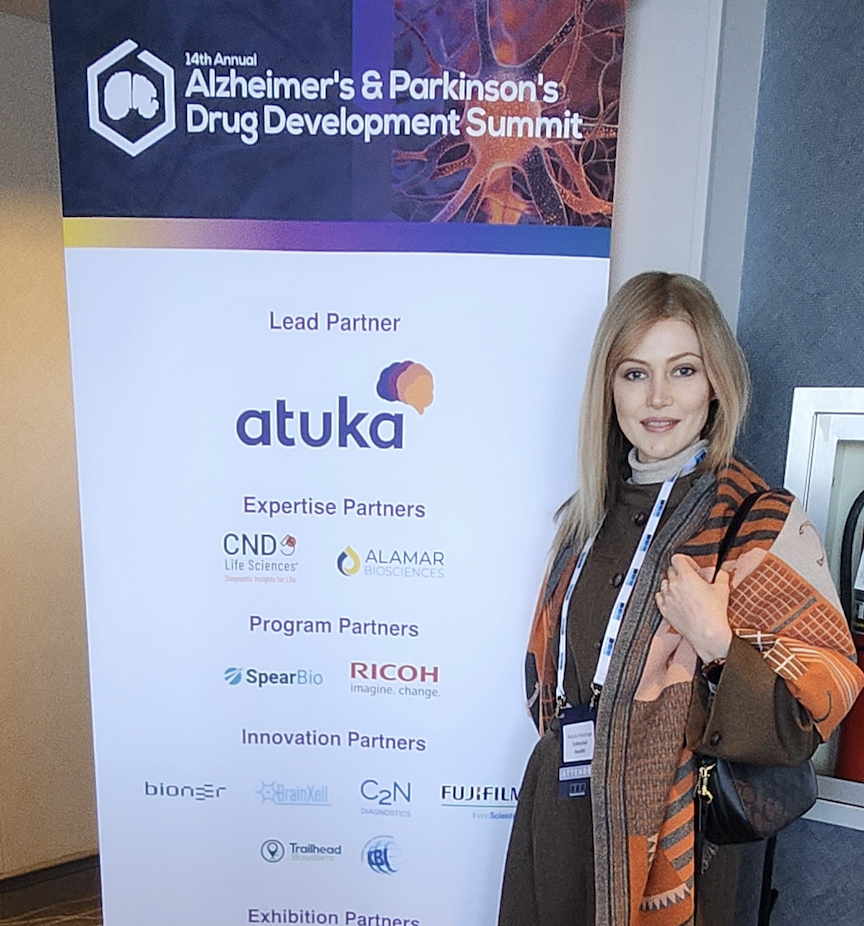
This week, Dr Nat Hastings represented innovative research into astrocyte pathology in Parkinson’s at the 14th Alzheimer’s & Parkinson’s Drug Development Summit on behalf of Cellestial Health at Hyatt Regency Boston Harbor.

Astrocytic lineage is one of the most populous cell types in the brain, yet the damage Parkinson’s pathology does to it remains underappreciated. New research, including ours, is challenging previous dogmas that Parkinson’s is purely a disorder of the dopamine system where dopamine replacement is sufficient as a treatment, calling for more cell-inclusive approaches.

Several cutting-edge themes in Parkinson’s figured strongly at the conference:
✦ Choice of correct models – alpha-synuclein aggregation is the leading standard but translation from models to patients remains poor, so several models may be necessary to interrogate relevant mechanisms
✦ Inflammation, gut-brain interaction, and lysosomal / mitochondrial dysfunction may act as important contributing aetiologies
✦ Toxin models may be suitable for symptomatic (dopamine replacement) treatment as they model a relevant 𝘴𝘵𝘢𝘵𝘦 of dopamine denervation, but not for the disease-modifying treatments since they do not necessarily model the relevant disease 𝘱𝘳𝘰𝘤𝘦𝘴𝘴
✦ Cross-facility validation of findings is key
✦ Biomarkers are important at every step: target disruption validation in humans, trial enrolment and stratification, evidence of target engagement, diagnosis
✦ Popypharmacy is a more likely solution in a complex disease rather than a single pill to cure-all
If you want to discuss what is new, what is validated, and what is coming in the field of Parkinson’s and dementia – please reach out.