
Tag: Academic
-

WPC2026: Three Years Later, Somewhere in Arizona
A very special community came together for the World Parkinson’s Congress on 24-27 of May in Phoenix, building on from the strong momentum of the 2023 Congress in Barcelona. The Parkinson’s community showed that it:✦ Sings✦ Dances✦ Paints✦ Researches✦ Never stops What other conference have you been to where the whole audience of a plenary hall drums together at the…
-

One Nucleus Awards Gala
Last Thursday 19th of March brought the UK-wide life sciences ecosystem leaders together for a very special occasion of the #ONAwards26 celebration at No.11 Cavendish Square in London. It was a great honour to have the project between Cellestial and The University of Manchester, supported by a Parkinson’s UK grant, recognised as one of the finalist entries in the “Best Industry and…
-

Best Industry and Not for Profit Collaboration: Finalists
The annual One Nucleus Awards dinner celebrates the excellence of the diverse Life Sciences sector, recognising all parts of the community. One Nucleus believe that it is the interactions and dynamics of the entire ecosystem that lead to successful value and impact creation, the vision that resonates with our team’s. This year, the collaboration between…
-
Back at it again in Boston
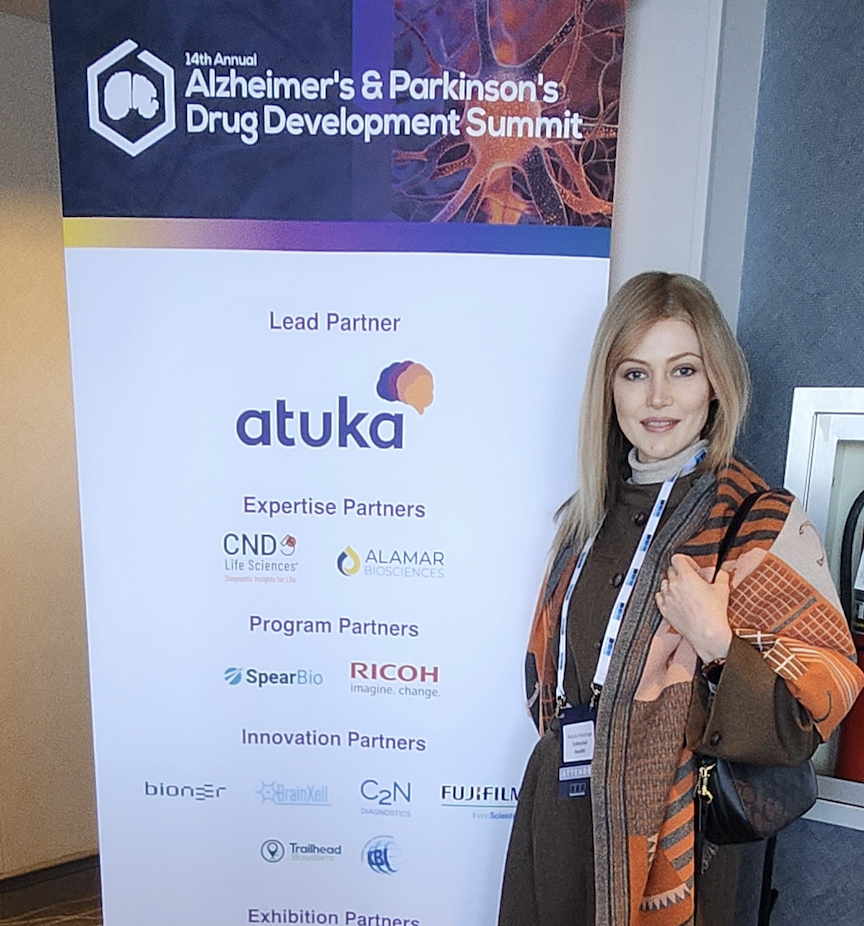
This week, Dr Nat Hastings represented innovative research into astrocyte pathology in Parkinson’s at the 14th Alzheimer’s & Parkinson’s Drug Development Summit on behalf of Cellestial Health at Hyatt Regency Boston Harbor. Astrocytic lineage is one of the most populous cell types in the brain, yet the damage Parkinson’s pathology does to it remains underappreciated.…
-

BMCS and Parkinson’s UK: New Approaches to the Treatment of Parkinson’s
Dr Nat Hastings represented Cellestial Health at the RSC BMCS and Parkinson’s UK “New Approaches to the Treatment of Parkinson’s” conference on Wednesday 12th, alternating between the corporate exhibitor stand, academic poster presenter, and an audience member of the many insightful talks at the majestic Royal Society of Chemistry halls. Here are the highlights of…
-

Parkinson’s UK: Further Funding for Pioneering Approach
Parkinson’s UK awarded Cellestial Health £55,000 to continue exploring networks of brain cells that may hold answers for new treatments for Parkinson’s. There are many different types of cells in the brain. We know that in Parkinson’s, brain cells that produce dopamine become damaged and start to die over time. However, it’s possible that other…
-
Astrocyte Transplantation as an Alternative to Drugs?
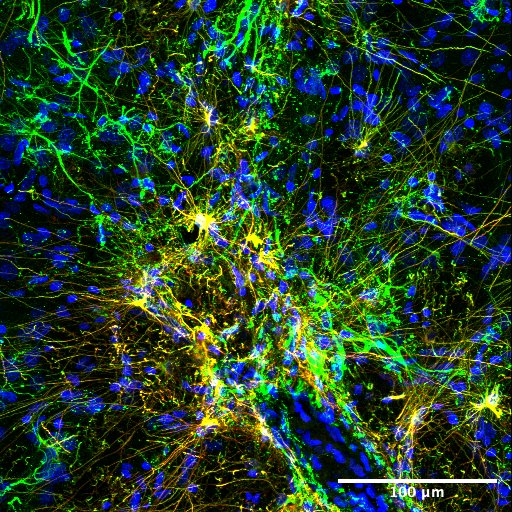
There are many ways to protect astrocytic networks. Drugs can work well, with a major caveat – they rely on the drug target being available. If cells are irreparably lost or damaged, it could be that the only way to restore the network balance is by supplying new, healthy cells. Dr Nat Hastings explored the…
-

Stronger Together: Collaborative Approach with the University of Manchester
Cellestial Health is a spin-out from the University of Cambridge, but did you know that we have academic collaborations across the UK and globally – including with the University of Manchester. Our connection with Manchester started in the summer 2024 at the Innovation Lab event which welcomed four industry partners to team up with the…
-

Astrocytes: Equally Important yet Diverse
Are all astrocytes the same in Parkinson’s? Astrocytes represent a brain cell type that is found across all areas of the brain. Depending on the region, they comprise 1/3rd – 2/3rds of all cells, and network coupling is an important feature of all astrocytes. However, multiple differences have been noted among astrocytic populations, both within…
-

Leveraging Cambridge Network at the Judge Business School
Cells can’t do it alone, and Cellestial Health team members Dr Nat Hastings and Dr Saifur Rahman couldn’t have done it alone either. This is why they tapped into their Cambridge network and attended a week packed of lectures and events at the Judge Business School as part of the summer 2024 “Ignite” program. Learn…